Sexing the Cherry
 I never read the backs of books or introductions. They distract and usually take away from the reading experience. I like my journey into a book to be fresh and unbiased as much as possible. Sometimes I’ll read an introduction afterwards if it offers some sort of historical context or was written by somebody I admire. Jeanette Winterson’s Sexing the Cherry is a richly depth-filled world that I utterly adored falling into. Her writing in the novel is unusually complicated, but deceptively simple. She is vast and layered. The writing doesn’t need cheating with a back cover blurb, but for some reason I found myself reading it this time. Maybe I was looking for a clue as to what the novel was supposed to be about. I know what I was getting out of it, but maybe curiosity hedged in, and needed hints as to where this bizarre story would lead. There I stumbled across the blurb from the San Francisco Chronicle intoning the book with, “ the philosophical form of Milan Kundera and told with the grace of Italo Calvino.” That solidified something for me. I don’t know if that would have occurred to me, but once read it became certain. It clarified something for me. Sexing the Cherry is Kundera, it’s Immortality with its interchangeable lives over time. Sexing the Cherry is Calvino, it’s Invisible Cities with the spinning white city where Winterson’s escaping ballerinas inhabit. I admire both Kundera and Calvino, and the Chronicle definitely tipped me towards a new understanding, but there is also something uniquely Winterson at play here.
Sexing the Cherry revolves around the story of a son named Jordan and his mother the Dog Woman, who scoops him out of the Thames as an infant. The tale is an amalgamation of seventeenth century lore complete with Cromwell, King Charles the First, and puritans, mixed with fairy tails, and Old Testament fervor as the characters explore the nature of time and love.
In this novel I was particularly interested in how Winterson constructed her characters, and especially that of the Dog Woman. Dog Woman is a monstrous entity and the descriptions heighten her to something from Greek myth with tales of scale, stench, and righteous revenge. Dog Woman is situated as someone larger and outside of the everyday world we know, but who later is paired up with her parallel personality of the modern day environmental activist character. Dog Woman is something half-wild, yet oddly sophisticated. She lives by her own rules of conduct, anchored to humanity through her love for her son Jordan. Early on Jordan recounts how he was rescued by Dog Woman and came to live with her, describing her as scooping, “…me up, she tied me between her breasts whose nipples stood out like walnuts. She took me home and kept me there with fifty dogs and no company but her own” (3). Already we glimpse the mythic tones of Dog Woman; possessing fifty dogs and nipples like walnuts; raising a foundling as if he were a lost pup. On page five we are given a glimpse at how this woman operates as she threatens to smother someone between her breasts if he doesn’t allow her son to see a newly discover fruit on display.
“He started humming and hawing and reaching for some colored jar behind his head, and I thought, he’ll not let no genie out on me with its forked tongue and balls like jewels, so I grabbed him and started to push him into my dress. He was soon coughing and crying because I haven’t had that dress off in five years” (5).
A gesture normally reserved for embracing, welcoming somebody into one’s breast, by this woman is rendered an act of hostility where she crushes somebody amidst her stench.
This woman’s appearance becomes more explicit as she chronicles her attributes.
“My nose is flat, my eyebrows are heavy. I have only a few teeth and those are poor show, being black and broken. I had smallpox when I was a girl and the caves in my face are home enough for fleas. But I have fine blue eyes that can see in the dark” (19) Her description is gruesomely decadent in contrast to her blue eyes that link her to the supernatural with their night seeing abilities. She is something primitive and fierce like an ogress, but with her clear eyes she watches over her son and does what she believes is right. In the same paragraph she illustrates her epic size by recounting a tale about when a circus came to town and she was put on a scale opposite an elephant and the poor creature was hurled out of sight by her massive weight. She is larger than life, taking on the attributes of a tall tale exaggerating reality to explain a truth.
Where these characters flourish is in their contrast.
“I know that people are afraid of me, either for the yapping of my dogs or because I stand taller than any of them. When I was a child my father swung me up on his knees to tell me a story and I broke both his legs. He never touched me again, except with the point of the whip he used for the dogs. But my mother, who lived only a while and was so light that she dared not go out in the wind, could swing me on her back and carry me for miles. There was talk of witchcraft but what is stronger than love?” (21)
The cruelty of a father, the unintended pain, a mother as slight as a daughter is huge, love as supernatural strength, all of these ideas are set up in this short passage and are echoed throughout Winterson’s novel. There is a conflicted duality running through all of this. A woman who is not feminine, but wears her size and filth like armor, trouncing with brutish force and righteous rage those who oppose her. This duality is also mirrored with Dog Woman and her son Jordan. Dog woman, solid and unquestioning while Jordan falls into the orbit of larger characters and is always searching. Inverted strengths with gravitational pulls, sometimes deceitful and murderous, Dog Woman is tethered to the daily world by her love of truthful and questing Jordan. These parallels and contrasts allow her mythic characters to soar in their search for answers.
If Winterson’s twelve dancing princesses could seamlessly inhabit Calvino’s Invisible Cities, and Kundera’s Immortality could function as a guide to understanding how Winterson’s characters fit together, then the depth and descriptions of Winterson’s characters are what allows her to explore something truly profound. Through her bizarre and richly colorful characters, she creates a bestiary-like world illustrating relationships and orders; playing with the fabric of history to explore the meaning of existence.
Labels: annotations, books, literature
posted by Scunnard @ 12:18 PM
0 Comments

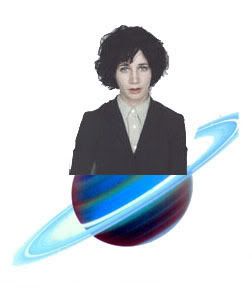 I have a complicated relationship to writer, performer, and filmmaker Miranda July. I like her, and that’s complicated. July and I both started producing work around the same time out of the same scene. I witnessed early film projects and performances in the clubs where she was cutting her teeth, and remember when her video chain letters were first making the rounds. Her socially surreal treatments and obsessively idiosyncratic storylines repeatedly cast characters in situations where they pine for new lives and means for human interaction. Out of this July grew into a success. One is amazed by how July’s voice seems to translate into every media she attempts. She makes a movie and wins Camera d’Or at Cannes. Her work has been featured in the last two Whitney Biennials, and her writing ends up in the Paris Review and the New Yorker. She makes it look easy. Then there’s the fact that she and I were born on the same day in the same year… and that her parents taught at the same school that I am now attending for my masters degree. You see, it’s complicated. That’s why I want to hate Miranda July, to think she’s clever, but overrated. Jealousy.